Introduction
In the fast-changing world of cars, hybrid vehicle diagnostics has become an important part of keeping current cars in good shape. As hybrid automobiles that use both gas and electric power become more widespread, both mechanics and car owners need to know how to diagnose them. Hybrid vehicle diagnostics is now a specialized field in automotive technology because of the use of powerful electronic control systems, complicated sensors, and battery management units.
The Importance of Testing Hybrid Cars
The most important thing about hybrid car diagnostics is that it can find problems with performance before they turn into expensive repairs. Hybrids use two power sources instead of just one, and both systems need to work together for the car to work well. Technicians can use hybrid vehicle diagnostics to look at data from both the electric motor and the combustion engine to find problems, inefficiencies, or any dangers. car owners make sure their hybrid systems work well and get the best gas mileage and battery life by doing routine hybrid car diagnostics.
How Hybrid Vehicle Diagnostics Work
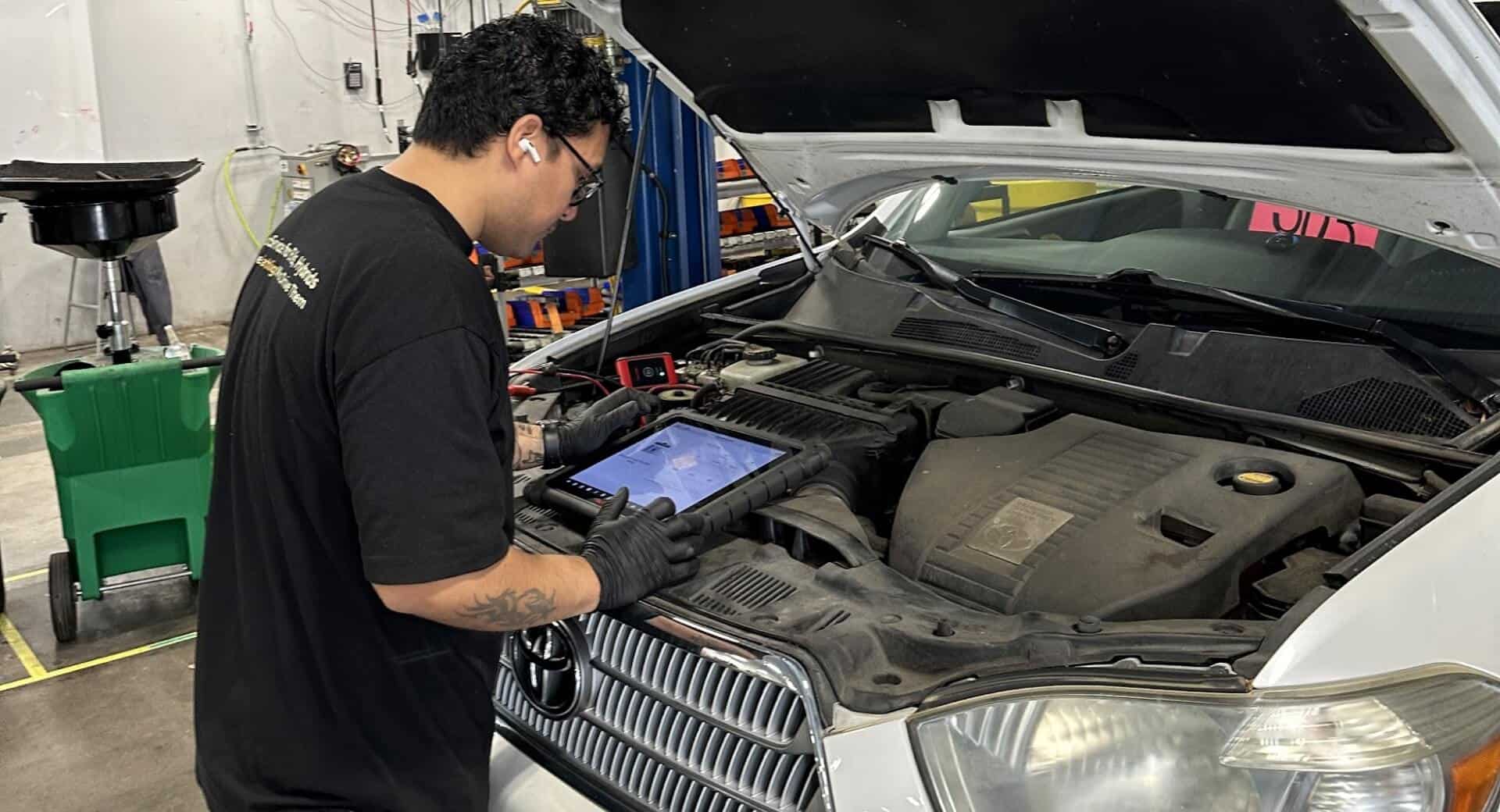
Hybrid vehicle diagnostics uses a mix of onboard diagnostic (OBD) equipment and cutting-edge computer software to work. An electronic control unit (ECU) in every hybrid car keeps track of information from sensors that check the fuel injection, emissions, electric motor operation, and battery state. When something goes wrong, hybrid car diagnostics equipment can read these error codes to find out what the problem is. Newer scanning instruments for hybrid car diagnostics can read codes that are particular to the hybrid’s electric drive system, regenerative braking, or battery efficiency. This exact detection helps technicians fix faults and bring both propulsion systems back into balance.
Tools and technologies used to diagnose hybrid cars
When it comes to diagnosing hybrid vehicles, the instruments are much more advanced than regular OBD-II scanners. You need special diagnostic software that can read hybrid powertrain data to work with hybrid systems. To get reliable readings on hybrid vehicles, you need tools like high-voltage safety meters, battery analyzers, and hybrid system scanners. Thermal imaging cameras and computer-based analysis platforms are also used by technicians to check the temperature of batteries and the overall flow of energy. As hybrid vehicle diagnostics get better, so are the technologies that help diagnose them, making it easier and faster to fix modern cars.
Common Problems Found by Hybrid Vehicle Diagnostics
One of the best things about hybrid vehicle diagnostics is that they can find typical hybrid-related problems early on. Some of these difficulties could be with the battery degrading, the regenerative braking not working, the inverter cooling not working, or the charging patterns not being regular. Technicians can use hybrid car diagnostics to find out when the hybrid battery pack is losing power or when the software for the electric and fuel systems doesn’t match up. Timely for hybrid vehicles stops tiny problems from becoming big ones, which saves owners time, money, and trouble.
Advantages of Routine Hybrid Vehicle Diagnostics
Regular diagnostics on hybrid vehicles has many advantages, such as better fuel economy and a longer vehicle life. Hybrid vehicles keep their performance up and lower their emissions by getting regular diagnostic checks. For fleet owners, hybrid vehicle diagnostics makes sure that their vehicles are always running and cuts down on downtime. It also gives information on how well the vehicle’s hybrid system works, which lets drivers change how they drive. Also, proactive hybrid vehicle diagnostics makes ensuring that hybrid vehicles meet environmental regulations, which helps lower their carbon footprints.
The Role of Technicians in Diagnosing Hybrid Vehicles
Technicians are very important for diagnosing hybrid vehicles because the systems are very complicated. They need to learn how to securely work with high-voltage parts and correctly read diagnostic codes that are special to hybrids. As hybrid car diagnostics get better, certified hybrid technicians employ digital gear and the latest software to make sure the results are correct. They can read diagnostic data, which helps keep hybrids running well and makes the battery last longer. In today’s car service sector, being able to learn and adapt to new technology is essential for successful hybrid vehicle diagnostics.
What the Future Holds for Hybrid Vehicle Diagnostics
AI and connected auto technologies are what will shape the future of hybrid vehicle diagnostics. Soon, hybrid cars will be able to do hybrid vehicle diagnostics on their own using real-time monitoring systems. These systems will let owners and service facilities know right away about any problems that may come up. AI-powered predictive diagnostics will change maintenance by stopping faults before they happen. As hybrid cars get smarter, their diagnostics will work with cloud-based data systems, making it possible to diagnose and upgrade them from afar. This change makes sure that hybrid vehicle diagnostics stays at the cutting edge of modern car technology.
Conclusion
In conclusion, hybrid vehicle diagnostics are an important part of keeping and improving hybrid cars in today’s high-tech environment. Hybrid car diagnostics makes sure that hybrid systems stay efficient, eco-friendly, and reliable by combining old-fashioned mechanical knowledge with new electronic analysis. As more and more people across the world switch to hybrid and electric vehicles, the need for hybrid car diagnostics will only grow. Understanding and using hybrid vehicle diagnostics is important for both daily maintenance and long-term sustainability. This is important for the future of automotive performance and environmental responsibility.
